A New DSM Will Not Fix This
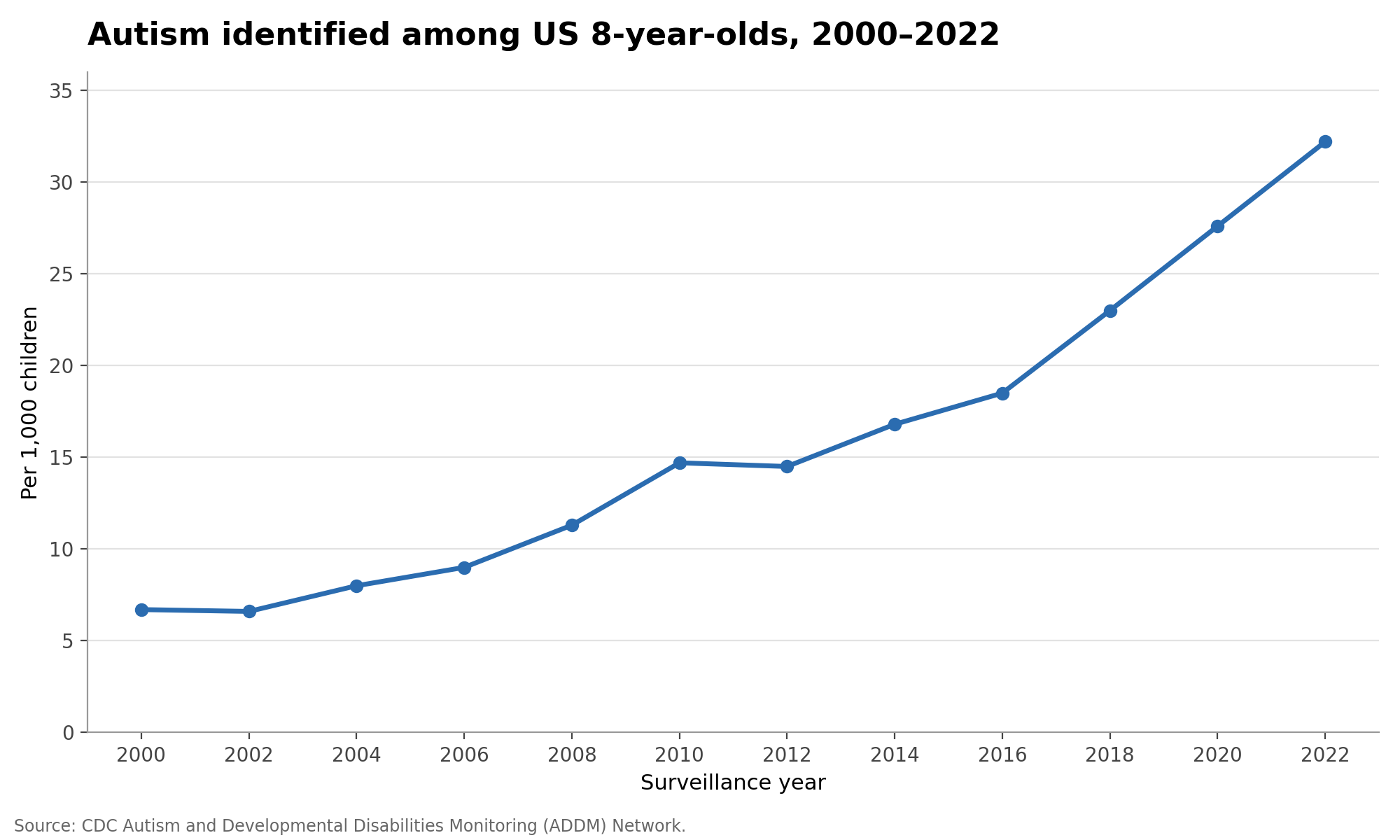
The S in DSM stands for statistical. When speaking about pathology, the behaviour is not just outside of the norm (deviant), but harmful to the patient or those around them. At this rate, a new version of the DSM will simply not be able to define many of its previously recognised pathologies as being statistically deviant, even if they, are, in fact, pathologies.
Time for a funny anecdote. I was apologising to my in-laws at a wedding for my friend’s behaviour. “He’s got autism.” I said. “Proper autism.”
“Oh.” They said. “He seems relatively normal to me.”
Maybe it was the fact that they were speaking broken English, and I was speaking broken German, or maybe it was the fact that we had all drunk enough alcohol for our BAC to be illegal to drive until the next week. But to me, in that moment, it seemed like they were making a joke.
Of course, Germans don’t joke.
Germans aren’t innately autistic, you can throw that joke in the bin. But the point is that there’s a reason that the closest we get to any kind of universal health manual is the ICD, which, well, is itself too vague to be of use due to trying to be applicable to everyone.
Nobody likes the word culture or society when you’re trying to be objective, both are the boogeyman, they are nightmares of semantics. There is undeniably a case for a country-by-country, or rather, culture-by-culture mental health manual. If you wanted to be objective, you should have gone into an actual science.
Very famously, Dissociative Identity Disorder/Multiple Personality Disorder cases sharply rose in correlation to the release of Sybil, before which the condition was practically both undocumented and/or plausibly didn’t exist. Several decades later someone tracked down the patient the story was based on, and discovered that the patient had deceived the psychiatrist out of some kind of infatuated bid for attention.
Put down your pitchforks, I’m not saying determinedly it doesn’t exist. I’m saying that culture clearly has some play in this. Including cross-culture.
Lesser known, in a post-graduate class the professor dropped a pop-culture note on the cross-cultural cross-contamination of plausibly-quasi-faux-mental-pathologies, in this case: anorexia.
After a woman in Hong Kong dropped dead in the street after starving herself, anorexia cases, again, rose sharply. Now, does this mean that there weren’t eating disorders or body-dysmorphia in Hong Kong before this? Or did the incident simply raise awareness for it?
Maybe I’m just a bit jaded, but I think, despite my “profession”, that much of the diagnostic tools and groupings should be concealed and obfuscated much further from the general public. My theory is not so much that mass-access to knowledge has allowed people to recognise and seek help for their pathologies, but granted people the knowledge to have acceptable expressions of their pathologies.
You can argue the difference between a hikikomori and a neet, the underlying pathology is most likely the same, even if the manifestations of them may differ in meaningful ways.
PTSD, MDD, GAD, ADHD, ASD, all of these have become so common knowledge, their symptoms, expressions, quite literally to the point of pop-culture, that they are rapidly becoming mono-cultural in terms of their expression. Everyone knows what these things are, and, I’m going to use the S word again, in current ‘society’, most young people feel like there is something fundamentally wrong with them, and they attribute that to the most acceptable form that’s available to them: mental illness.
Think of the upset child, who is learning to regulate their emotions, who learns that when they perform certain behaviours, that they receive different responses. Some are acceptable, some are not. The child quickly learns which one gets them what they want. “If I am sad, I cry, and then I am comforted.” can quickly become “If I wanted to be comforted, I can cry.”
Children are smarter than you, and know better than you what you want. Again, another famous case where a false conviction was nearly made due to the children of a child-care facility inferring the answers investigators were looking for: the investigators kept asking the same questions, even after the children gave the same answer, so eventually the children gave a different answer that the investigators liked.
Eventually, children become adults, and if there’s only one thing that developmental psychologists got right, it’s that children are very good at keeping their lessons well into adulthood.
At some point, it became far more acceptable to say “I have a disorder.” than to say you felt a sense of alienation, or insecurity, or deep multi-generational betrayal. And until (and this will never happen) the population dealing with what they feel to be novel discomforts of growing up and living aren’t able to see constant content that not just validates their faults, but also encourages them to embrace them (whilst simultaneously pathologising those who don’t accept such faults), the DSM or any other diagnostic manual will never be a reliable tool.
“I hurt you because I love you, this is just the way I am, babe.” is a pathology. “I let you hurt yourself because I love you, because that’s just the way we both are” is just Munchausen by mutual proxy.
Being sick does not excuse you from getting better.