"Are you Christian?"
I was invited to a philosophy event the other night, no, thank God, not one at University again. We ate fresh, hand-made Italian food and hung out playing pool. The guy who invited me I had met after we spent an hour discussing a theory I had about the anthroponymy present in the movie Babygirl, a movie I was writing a review of for this website at the time – only for him to realise, and not because of the film’s material, that I was not Christian.
Though the event itself wasn’t Christian, after I met the 3rd Peter within 10 minutes of arriving, I stopped my swearing as much as I could help.
Once, while I was unable to go home, a beautiful young woman approached me at the train-station after school. She asked me what I was doing, and I lied: I told her I was waiting for the train. She struck up conversation with me, and told me she was studying theology at university. She said I seemed like I needed help, that I seemed miserable. In a sense, even though I had lied about what I was doing there, I probably was considering waiting for the next train, just not in the sense the usual person means.
We got on the next train together, and she asked me what was on my mind, and I said the first thing that I thought would be acceptable to her: that my mother had cancer. She hugged me even though I hadn’t showered in 3 days, and asked to pray with me for my mother, and then told me about a church she went to. I didn’t dare tell her what my mother was actually like, how I was completely indifferent to the cancer, how my mother had made my life intolerable enough that I constantly wanted to die and couldn’t eat. Then I got off the train and walked to the place where I hid when I couldn’t go home, and read, and wrapped my jumper around me and pretended that nice, warm, pretty young woman was still hugging me, the same way I did after anyone hugged me. I can still feel my last hug from a week ago. It’s tight in the way that it is when neither of you want to let go.
That was the closest I have come to being preached at by a Christian. A well meaning young woman who saw a kid in distress, and wanted to make things a little better.
I was technically speaking raised religious. I don’t think any of it really stuck to me – one glance at this website can tell you that. My place of worship was just somewhere I sung, someone said nice things, and where we got to make food for our parents. That was that.
Either way, just because I’ve never met a zealot or a preacher doesn’t mean they don’t exist. I’m sure they do. Fortunately my experience with the religious, Christian or not, has largely been made up of people who value community, family, and goodness. I tried being religious nearly half a decade ago (oops, spoilers, there’s the answer to your question in the title there) with no result. I read the KJ Bible, The Tanakh, The Quran (Clear version, whatever that means), The Book of Mormon, and even a bunch of translations/revisions used by Jehovah’s Witnesses’. I wasn’t really captured by any of them, all they did was grant me slightly more nuance on the ideas I had when it came to discussing the topics.
As probably the only not-Christian person in the room, they had a lot of questions for me, and they were all asked with respect.
I don’t know. I think I want to know God. I believe in an objective truth, and regardless of what structures we make, it is impossible for us to know due to our perceptions, but that doesn’t mean we shouldn’t strive towards trying to know. It’s been a while since I read the Bible, but I tried to make use of it for my explanations where I could.
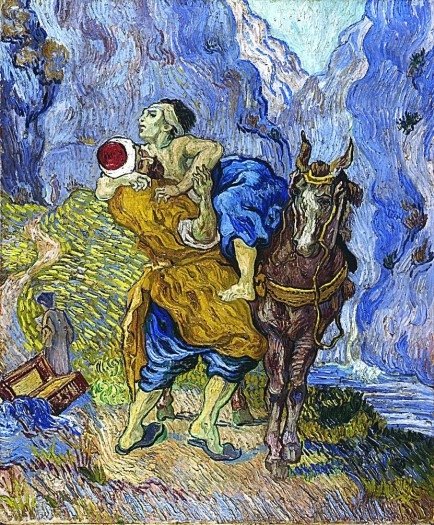
I might not believe in what they called God, but I certainly believe in Evil – and I think that puts me as close as I can to being religious as I can get without being so. I believe it is our responsibility to make sure we do not grow the evil that is already present in the world. I used the example of The Good Samaritan, in that they do not expect a reward. They give something up, they sacrifice to help another, they expose themselves, make themselves vulnerable for another, not for reward, but its own sake. Whenever you do anything good it is the same. Every action tilts the world a little bit in a certain way, maybe not on a binary axis of good and evil, but in a way that certainly affects you and the people around you. Then they of course asked me about suffering, and in hindsight I am reminded of The Brothers Karamazov.
One of them told me of a girl they tutored who would not live past 21, and I told them that suffering was as essential to life as everything else, and that did not mean that it would be just.
The Good Samaritan is a story about how things are unjust, in a just world The Good Samaritan would be rewarded for their sacrifice, but, again, Cain was not rewarded for his sacrifice. The key difference between these two is that The Good Samaritan did not expect, did not believe in a just world, and that is precisely why he helped, why he sacrificed and expected nothing in return. Expecting an answer as to why this girl will die by 21 is an expectation of a just world. It doesn’t mean it’s not tragic. It also doesn’t mean it’s evil. It doesn’t mean we shouldn’t try to stop her suffering. If you expect a just, fair path, where your sacrifices are rewarded, you open yourself to the possibility of resentment, of becoming Cain.
The other day, while stopped in a random car-park, I heard a long, guttural scream. 5 years ago I would have never moved to investigate, but this time I did. Thankfully it was nothing, but my mind was racing, what might be wrong, what tools did I have at my disposal, what was I willing to give up to help this person.
Thankfully it was nothing. Just some hooligans making noise. But I am glad I checked, and I don’t think that makes me Christian.
The war against Evil is one that can never be won, and it’s naivety to consider it so. Evil found its way into Eden after all. The war is a price, a sacrifice, for the future to not become worse and worse, and eventually become Hell, or something much, much worse.