The Primal Flaw

For a moment, I am angry at everyone else. I am bitter that people were such poor friends, who supported me so poorly that I was driven to drink. Then I remembered that this is the best time in my life, and I have more friends than ever, and I still drank as much. Whether I am sick or not doesn’t matter, as the behaviour itself is damning, it is its own sin. I drank when I knew it was wrong, or knew it wouldn’t help. Mea culpa.
I think “If things had been different” is the primal flaw of idealism. If people acted one way or another things might be different. It strikes me as fantasy, imaginative wish fulfilment for people who are incapable of tolerating reality. If people did this or that, nothing would change, because idealists like to pretend that the future is not tied to the past, and that the present is retroactive and omniscient. I’m sorry, Rubicellin. I do not have as noble of a soul as you, nor as bright a mind, nor as sharp and insight into the infinite potentiality of what was, is, and could be.
Idealism is a trick of your presumable rationality that convinces you that by understanding the past, you can change it, but you can’t. The only thing you can do is change the future, by acting in the present using models from the past. That is the only way we can find resolution from the horrors of the past, and ensure future outcomes.
In an ideal world neither you, nor I, nor anyone else was born, or alternatively we were born into Eden. Humanity without sin or end. LCL.
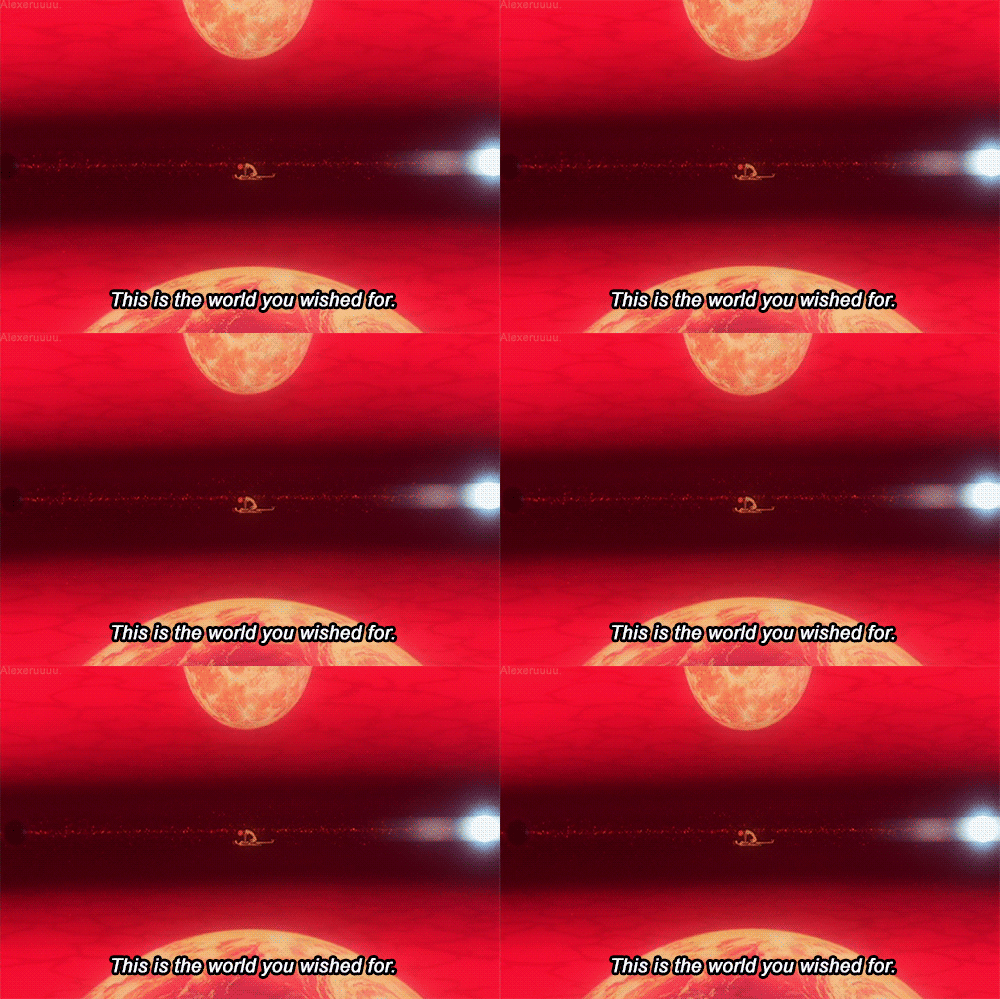
In this idealism is even more dishonest. What idealists refer to as an ideal is subjective to them. How much should people be allowed to suffer? How much good should be given? What hardships and challenges grant meaning? What is ideal? What you really mean is your ideal. The idealist seems deluded enough to think that if everyone did what they think would be best, everything would be alright. It is quite possibly the most narcissistic thing you can be. It is to presume you not only know all of the truth, but that you have the power to command others to follow it with effective enforcement. But that would make you a godlike being, and none of us are that.
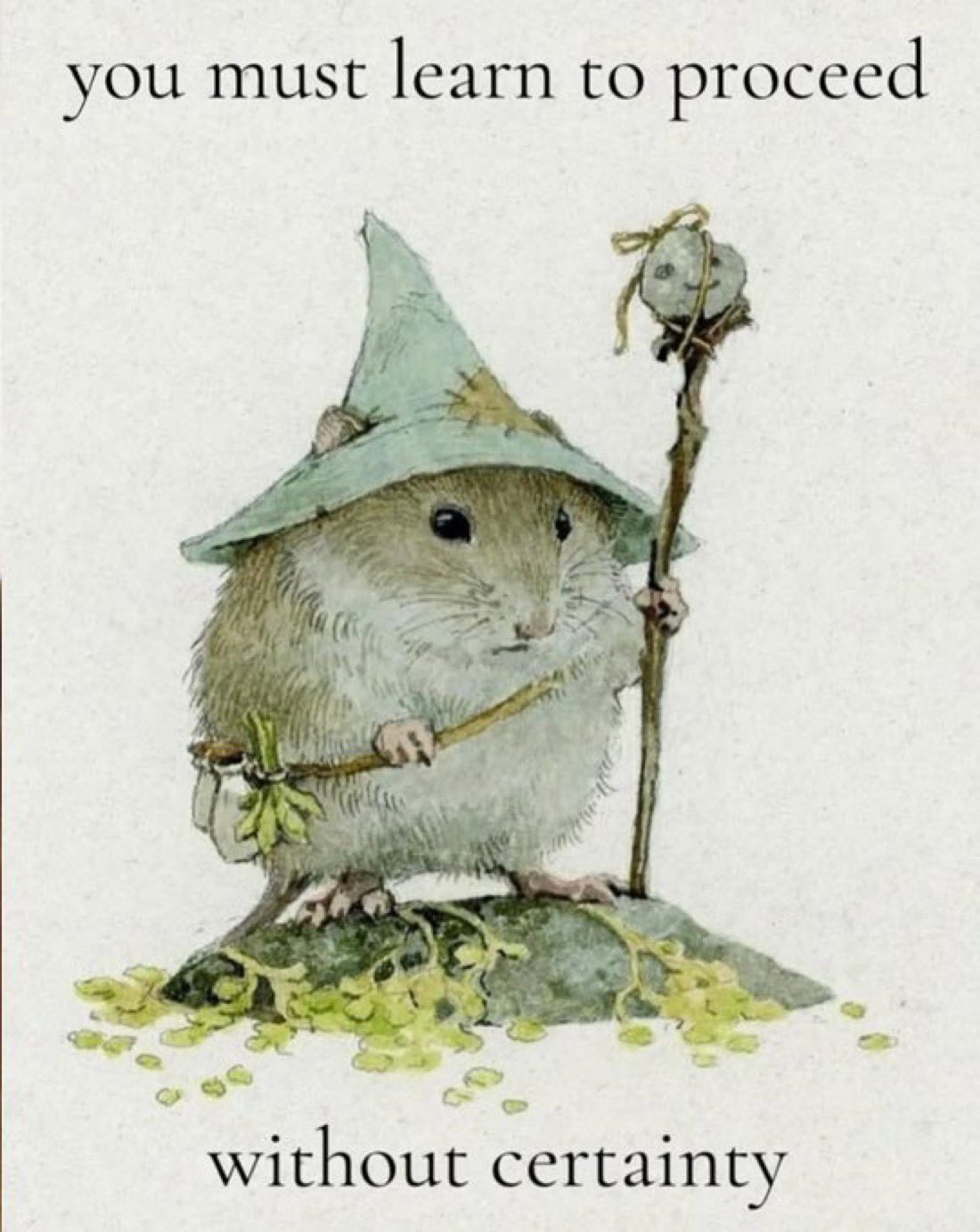
You can argue semantics are the answer to this, and you could probably talk me under and around the table, some method of finding what the ideal is, but I assure you there are 5000 other people who could do the same and we would never come to any kind of agreement. I believe truth doesn’t compromise, people do. As long as there is one person who doesn’t truly believe in your ideal, or can’t be forced to abide by your ideal, the system collapses. After all, in an ideal world, or whatever you or I imagine to be ideal, doubt in the ideal would not be possible. The next closest thing to that is faith, action without certainty of the truth.
I don’t want to say what I think because I am terrified that speaking it will summon it into being, as has so frequently happened with me in the past. I am terrified, but I don’t pretend I am God, or know God, or even know myself or anything else. I doubt anyone knows the ultimate truth and anyone telling you they do is most likely a narcissist, delusional, or a liar trying to sell you something. That doesn’t mean an ultimate truth doesn’t exist, or that we shouldn’t try to learn more about it. It means that we must have humility in search and practice of it. We must consider that we do not have a fucking clue what we are doing.
P.S
It seems that idealism serves the same function that ruminating or intellectualising does. You need something without meaning to have meaning. Your hardships and struggles in the past are no longer random, you are no longer a senseless victim of circumstance. In integrating that belief, you protect yourself from the truth that the present and future are just as random and cruel. Regardless of what you change, or how strong you become, you will keep suffering in one way or another, even if you use every inch of your power to protect yourself. You will keep suffering meaninglessly, and there is nothing you can do to stop it. You are standing in a void. It is terrifying, which is precisely why people choose almost anything else, even claimed nihilists.
The alternative to idealism isn’t the void, it is instead to realise that you must act without the fantasy that you can make the past make sense. You can’t stop suffering. You can’t make it mean something. But you can face forwards and act without certainty despite the terrifying impossibility of it all. That faith is what allows for genuine action instead of idealistic fantasy.